Commercial

A critical role in all Commercial projects
Providing Foundations for Modern Commercial Projects
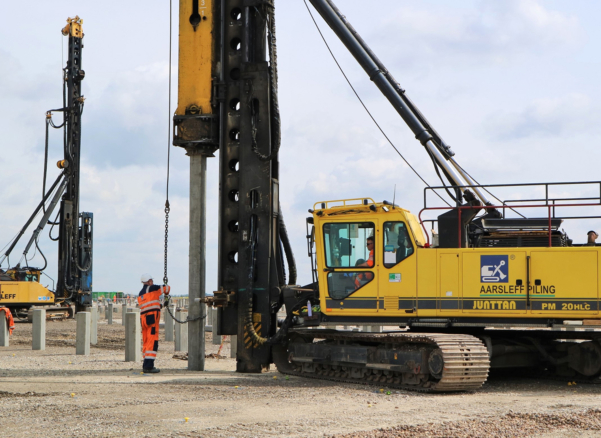
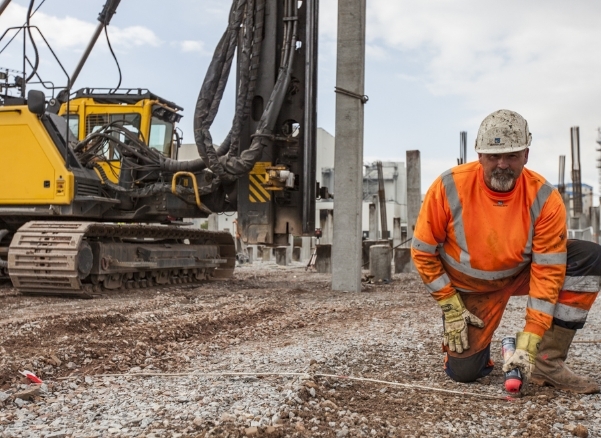
Aarsleff’s work is a fundamental component of commercial building projects, having provided the foundations and geotechnical expertise for many schemes, including mega-retail sheds, distribution warehouses, University accommodation, and major supermarket and household-name units.
Technically innovative solutions
Extensive Piling Resources and Capability for the Commercial Sector
Our engineers welcome the chance to work with project designers from the early stages to deliver a value-engineered solution that meets design load demands and the programme. Aarsleff provides clients with a comprehensive range of specialist geotechnical services for the planning, design, and implementation of ground engineering projects, as well as for managing ground risks across all commercial projects.
Customers return to Aarsleff for our expertise and experience on both brownfield and Greenfield sites; piling a multitude of projects such as warehouses, schools, manufacturing facilities, sports stadiums, car parks, hotels, offices and retail developments for household names like Tesco, Morrisons, Lidl, Derby County FC, Amazon, Ikea and many more.
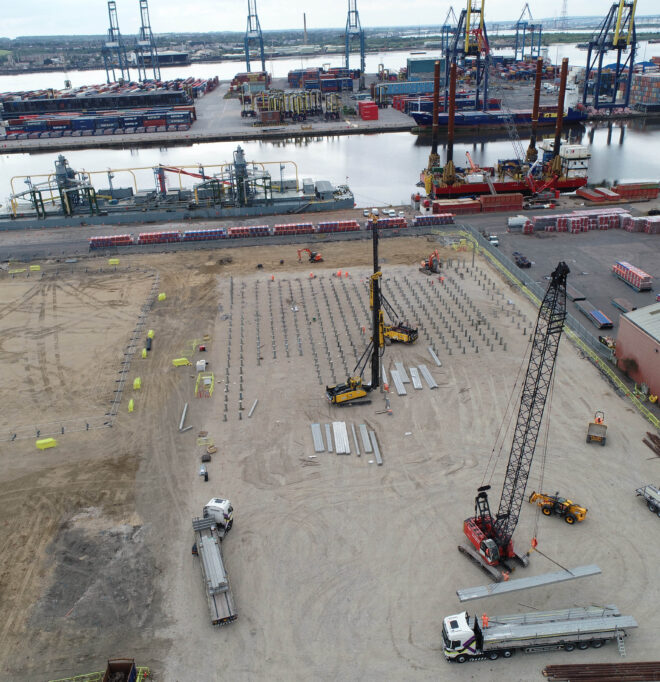
With tight timescales and deadlines to meet, Aarsleff can provide resources from our fleet of piling and geotechnical rigs, combined with the UK’s most extensive stock of un-jointed precast piles up to 16m in length.
Clients recognise the benefits of our driven piling and ground engineering solutions, where construction programme timescales are of the utmost importance.


Supporting clients with driven piling when construction timescales are critical.
Commercial Ground Engineering Services at Aarsleff
Aarsleff provides a comprehensive range of piling and geotechnical solutions suited explicitly to commercial developments. Our experience enables us to support retail, logistics, office, and mixed-use projects with safe, reliable, and programme-driven delivery, even on sites with complex ground conditions or tight construction timescales.
Piling and Ground Improvement Solutions for Commercial Developments
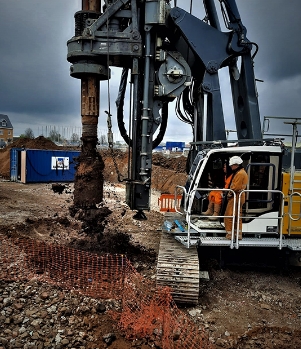
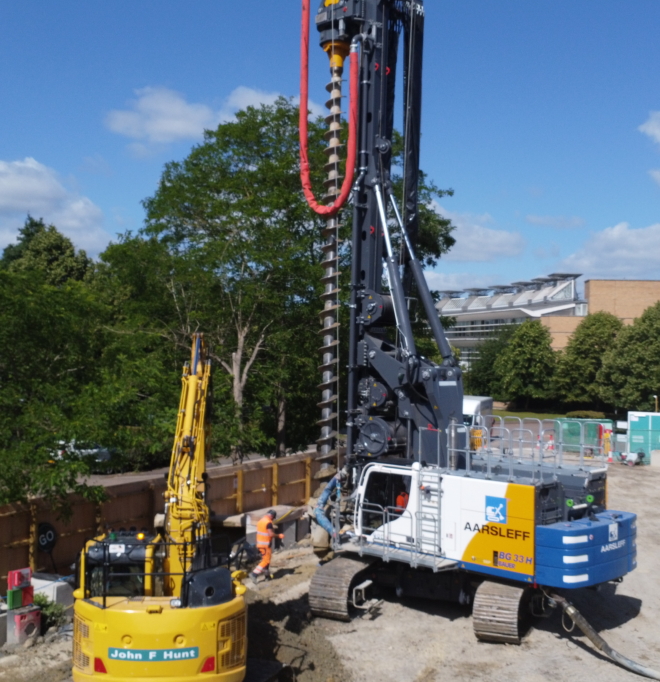
Piling and Ground Improvement solutions form the foundation of many commercial projects, particularly where ground conditions are challenging, load demands are high, or tight schedules must be managed. Drawing on our extensive geotechnical expertise and specialist fleet, we deliver a range of piling techniques suited to the commercial sector, including:
These methods provide robust, predictable performance for a wide range of structures, including warehouses, retail units, distribution centres, and other commercial facilities.
Commercial Retaining Wall Systems
Commercial projects often require retaining structures to manage changes in ground level, create usable development platforms, or support excavations on constrained sites. We design and install retaining systems tailored to commercial environments, including:
These systems provide long-term stability for site boundaries, embankments, service yards, access roads, and other critical infrastructure.
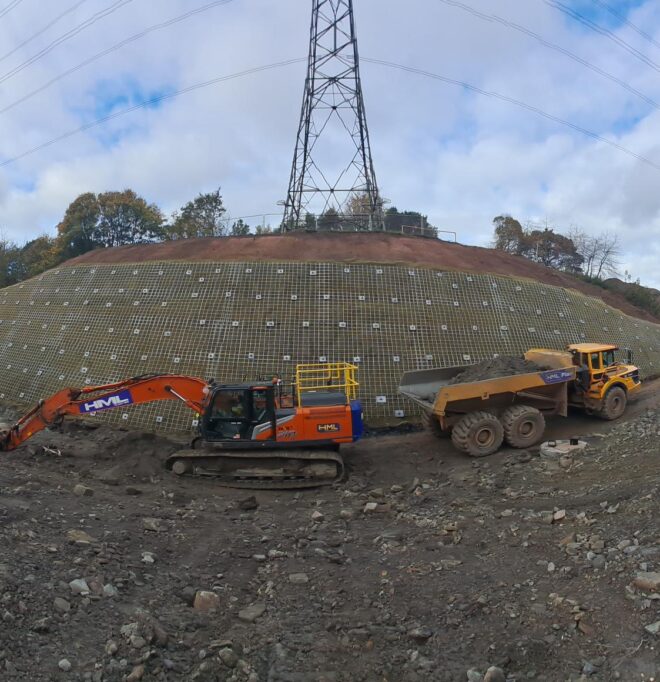
Geotechnical Measures for Slope Stability
Some commercial developments may require additional geotechnical measures to address ground movement, level changes, or restricted working areas. Our geotechnical solutions are designed to provide effective earth retention. They include:
These techniques are used to reinforce slopes and stabilise retained ground, helping to create safe, resilient commercial sites.


Get a quote
For more information about Aarsleff Ground Engineering or to send in your enquiry,
call 01636 611140 and speak to an expert member of our team today.
The Latest. News, podcasts & projects
Close